
- About Keith Hennessey
- About this blog
- About the National Economic Council
- About my work in the White House
About Keith Hennessey
I teach as a Lecturer in Economics at Stanford Graduate School of Business.
- I created and am teaching five courses this year:
- I’m Just a Bill;
- Fiscal Policy;
- Freedom, Democracy, and Capitalism;
- U.S. China: Strategic Competition and Cooperation; and
- Policy Time.
- In the past, I have taught:
- Contemporary Economic Policy, with Ed Lazear and Kathryn Shaw;
- Civic Workshop;
- The Open Road: Innovation in Cars, Driving, and Mobility;
- Financial Crises in the U.S. and Europe;
- International Economics;
- Technology, Innovation, and Entrepreneurship Policy;
- Legislative Simulation at Stanford Law School; and
- the Senior Undergraduate Policy Practicum for Stanford undergraduates majoring in Public Policy.
I spent 14 years in economic policy roles advising senior elected officials, including for a time as the senior White House economic advisor to President George W. Bush. My job was to coordinate economic policy for the president, including macroeconomic issues, tax policy, health care, pensions, Social Security and Medicare reform, energy and climate change, financial markets and institutions policy, housing, transportation, technology and telecommunications, and agriculture. I also worked on budget and international trade and financial issues.
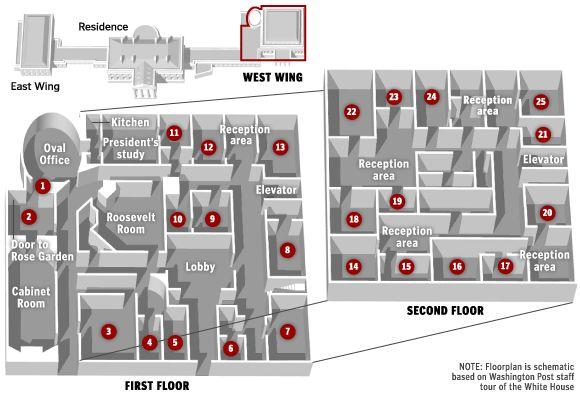
From August 2002 through the end of 2007, I served as Deputy Assistant to the President for Economic Policy and Deputy Director of the National Economic Council at the White House. In 2008 and the first three weeks of 2009, I served as Assistant to the President for Economic Policy and Director of the National Economic Council. I spent most of my waking hours for almost six and half years of my life here, based first in #19 and then #18.
In 2009 and 2010 I served as a Member of the Financial Crisis Inquiry Commission. It was a 10-person commission created by Congress to “examine the causes, foreign and domestic, of the financial and economic crisis.” The commission was frustrating and was not a roaring success.
Before working in the White House, I spent almost eight years working on Capitol Hill. I spent the bulk of that time as a policy advisor to Senate Majority Leader Trent Lott (R-MS). Before my time with Senator Lott, I worked for two years on the Senate Budget Committee staff for the Chairman, Senator Pete Domenici (R-NM), and before that for six months on the staff of the Bipartisan Commission on Entitlement and Tax Reform, which was co-chaired by Senator Bob Kerrey (D-NE) and Senator Jack Danforth (R-MO). Many years ago, I designed and tested software for Symantec Corporation.
I earned a B.A.S. in math and political science from Stanford and a Master in Public Policy degree from the Kennedy School at Harvard.
I haven’t done any TV spots in a while but used to be an occasional guest discussing economic policy on CNBC, CNN, Fox News, and Fox Business.
About this blog
Here are the coordinates for all different ways to read my content:
During my time in the White House, I wrote and edited hundreds of memos and presentations for President Bush. From 2009 through 2015 I wrote publicly fairly often. I basically stopped in early 2016. It seemed like demand for my kind of policy-heavy writing had declined so much that it wasn’t worth my time.
About the National Economic Council
The National Economic Council (NEC) is one of three policy councils in the White House, along with the National Security Council and the Domestic Policy Council. Every policy issue that comes to the attention of the President “belongs” to one of those councils.
The NEC is a coordinating body that helps the President manage economic issues. My staff and I were responsible for:
- analyzing economic policy problems and coordinating design of the President’s economic policies;
- framing strategic decisions and policy options for the President, integrating economic and other policy analysis with legal, legislative, and political constraints;
- acting as an honest broker among the various Cabinet secretaries and senior White House advisors, resolving conflicting views where possible, and structuring and leading Oval Office meetings at which issues and options were presented to the President;
- after a Presidential policy decision, working as part of the core White House team that wrote the speech, communicated the policy to the public, worked with Congress to enact a new law, and oversaw the implementation of that policy.
About my work in the White House
I worked for the President for 6+ years. The last thirteen months were by far the most intense, helping advise President Bush on his Administration’s response to the financial crisis. In addition to that work, here are some of the major Presidential policies that I helped design, enact, and implement:
- the 2003 law that cut taxes on income, capital gains, dividends, marriage, children, small businesses and estates;
- the 2008 economic stimulus, as well as tax cuts in 2004, 2005, and 2006;
- successfully opposing repeated Congressional efforts to raise taxes in 2007 and 2008;
- reforming the regulation of Fannie Mae and Freddie Mac;
- two energy laws that support nuclear power and other alternative energy technologies, and will reduce U.S. gasoline consumption 20 percent by 2017;
- eliminating the ban on offshore drilling for oil and natural gas;
- the “Major Economies” process that is restructuring global climate change negotiations to ensure participation by all large economies;
- creating Health Savings Accounts and implementing health policies to improve price and quality transparency;
- bringing private sector competition and market forces to Medicare and adding a prescription drug benefit;
- providing loans to U.S. auto manufacturers in 2008;
- coordinating the response to the 2002 West Coast Port Strike;
- coordinating the response to the 2002 Mad Cow disease outbreak;
- creating Terrorism Reinsurance after the 9/11 attacks; and
- the most popular policy change of President Bush’s tenure: the Do-Not-Call list.
I was heavily involved in budget and international economic issues, including all of the President’s budget submissions from 2003-2008, his line item veto proposal and earmark reforms, the G-20 summit of 2008, several Free Trade Agreements and the Doha global trade negotiations, and the President’s open investment policies.
There are several policies which I worked on for President Bush which, while not enacted into law during the Bush Administration, I hope will serve as models for future reform efforts:
- Social Security, Medicare, and Medicaid reform proposals, with the goal of making these entitlement programs sustainable over the long run;
- proposal for a standard tax deduction for health insurance and health insurance market reforms, to move toward market-based health care and make health insurance more affordable for tens of millions of Americans;
- proposal to make our farm programs less trade-distorting and more fiscally responsible; and
- proposals to make permanent the tax relief enacted in 2001 and 2003 and prevent future tax increases.
In my final days on the President’s staff, I answered some questions on the Freakonomics blog about working at the White House and on the NEC staff.