RNC Chair makes the wrong argument on Medicare
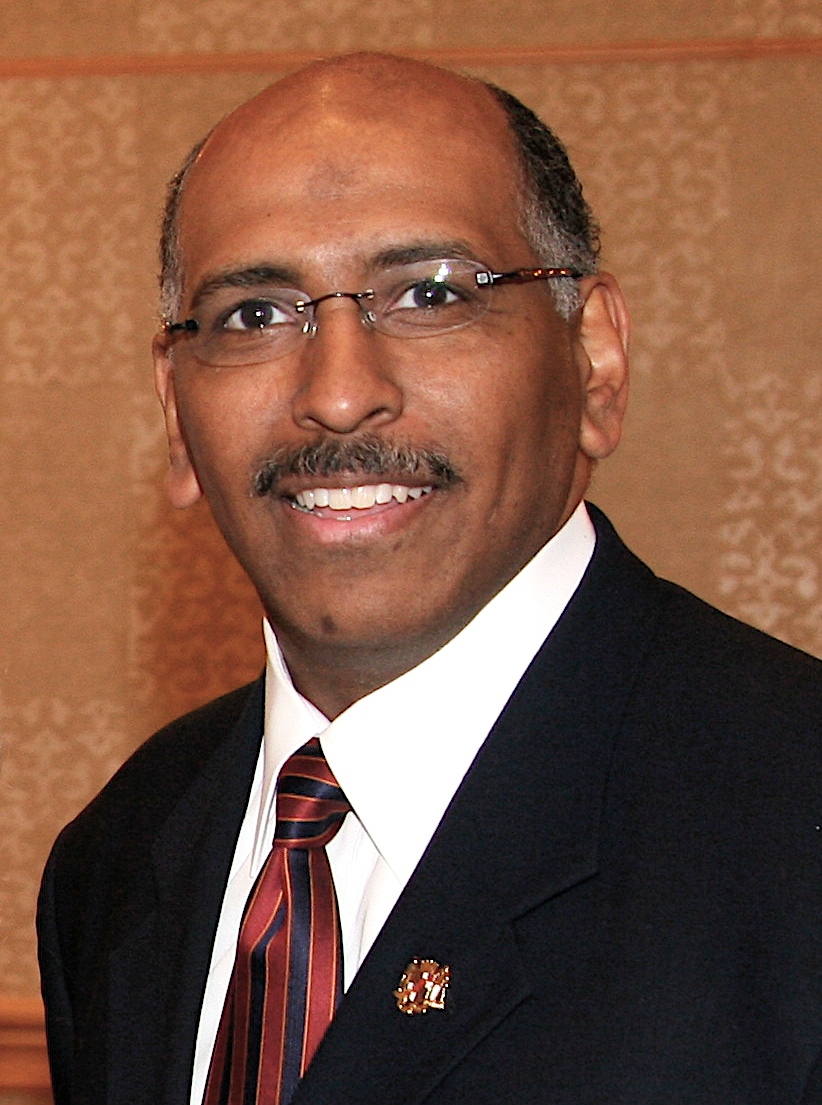
Here’s RNC Chairman Michael Steele this morning on ABC News’ This Week with George Stephanopolous.
And the reality — the reality still remains — the reality still remains that, at the end of the day, this thing grows the size of government; it inserts the government between the doctor and the patient. It now requires mandates on states that can’t afford, and it cuts $500 billion from a Medicare program that everyone in this country knows is on the road to bankruptcy.
Chairman Steele and Congressional Republicans are predictably using every policy and political weapon at their disposal to try to stop a bad health care bill. This argument, however, is nonsensical.
Medicare is “on the road to bankruptcy” because its spending is growing too fast. The way to get Medicare off the road to bankruptcy is to slow the growth of (in political parlance, “cut”) Medicare spending. “Cutting” $500 billion of future Medicare spending will make Medicare more fiscally sustainable, not less.
Indeed, we need to slow future Medicare and Medicaid spending by far more than the amounts done by the House or Senate health care bills.
I am not, however, praising the House or Senate bills health care bills for being fiscally responsible. Quite the opposite, since these bills capture so-called Medicare “savings” and then turn around and spend all of it on a new unsustainable health spending entitlement. The resultant policies would be less sustainable than current law, because the politically easy savings from Medicare would be replaced by politically harder-to-cut health insurance subsidies. This is why a vote for these bills is a vote for a future middle-class tax increase, which becomes a much more (politically) likely answer to future entitlement spending problems after the relatively easy Medicare savings have been captured and spent.
Anticipating the commenters, yes a downside of current budgeting rules is that it allows you to move money from one unsustainable program to another and claim that you’re not hurting anything. Technically, you’re not increasing the deficit relative to what it would have been under current law, but it’s irresponsible to increase spending if that current law path is unsustainable.
Had Mr. Steele wanted to play shameless scare-the-seniors politics, he could have accurately said that these bills were taking resources dedicated to seniors and instead spending them on working people. I wouldn’t have liked that argument, but at least it would have been accurate.
I hope Mr. Steele refrains from using this language in the future, or at a minimum modifies his attack so that it’s substantively valid. And shame on the House for yesterday moving us one step closer to fiscal oblivion.
My updated legislative projections for health care reform are coming soon.
(photo credit: Republican National Committee)
Related Posts
(best matches are listed first)- The Medicare battle begins anew
- Senate floor #001: Leader Reid’s bankruptcy argument
- Medicare: Krugman v. Gingrich, and Krugman v. Ryan
- The Administration’s flawed health care argument threatens their fiscal policy strategy
- The wrong health reform will hurt the economy
- More on the decade of profligacy argument
- CBO kills the President’s Medicare commission proposal
- By focusing only on covering the uninsured, are we solving the wrong problem?


Keith,
Totally agree on the rhetorical overreach on Medicare. Why aren't they banging the Medicare Advantage drum harder? As I understand it, some clever GOP Rep. introduced an amendment on Saturday that forced a choice between "trial lawyers and seniors," as it was intended to spun. So why not a little, "You chose poooorly"?
Oh, and I have a sense that some readers, like me, would like to ask you a little something we are in the dark about. It's not a big deal, but it would be nice to know something about the "behind the scenes" drama. I'm referring to Mr. Cao's baffling decision to vote yes.
I'm fully capable of understanding the pressures on a Republican representing a D+20 district. But this seems to me to be a "you sold your soul for WALES?" type deal. Cao's chances of winning in the next election are slim anyway, and not to be too crude about it, but when the Dems field the appropriate candidate for the District, Cao is out, no matter how much pork he brings in or how much Pelosi and Co. praise him. In fact, I can't get past the thought that the only conceivable way for him to keep his seat is to switch parties. And even then the appropriate candidate will make mincemeat of him.
Of course I could be wrong. The question is, why weren't Boehner and Cantor able to keep him in the fold? I happen to think it was pretty important to have party unity on this one–not to give the Democrats even a pretense of a fig leaf of bipartisanship. It's one of the only weapons the Republicans have at this point (party unity, I mean).
So: 1) Would Cao really do this for pork?, and 2) If it was just about price, why couldn't Boehner and Cantor work out some sort of a better deal for the guy?
I ask first out of pure curiosity, but second because the ire directed at Cao on the blogosphere Saturday night was palpable (justified or not). Since you know about these things, maybe you could give a brief word on the matter?
You're a scholar and a gentleman,
cheers.
To reply to my own question 1) Did Cao really do this for pork?, perhaps that was the wrong way to frame it.
For anyone interested (apologies to Keith for straying from his topic): http://spectator.org/blog/2009/11/08/defending-ca...
I'm thinking I agree with that article. If it's right, then maybe Boehner and Cantor didn't think it politic to keep Cao in the fold. The mistake I made was in assuming that Cao was a fiscal conservative and was in principle against the legislation. He's still going to lose in 2010, but he is obviously the most conservative rep. possible in such a district.
So the answer to the questions a lot of us have is that they're not framed properly, I guess.
Speaking of the Republicans, as one who is trying hard to stick with it and not "defect" to the Independent Alternative, would someone please explain to me just why Michael Steele is still leading this "Gaggle of Geese"? Someone needs to lead, follow or get out of the way! And, it certainly is not going to be, Michael Steel as we can see from where the GOP stands today. I'm afraid that the remarks he made this morning are in the unfortunate category of sounding as, well, I can only compare them to listening to the hesitant, stumbling, incoherent, uninformed rhetoric of Barack Obama!
I concur with the accuracy of the argument but the shame of it all is the shocking amount of pork in the bill– the wage index floors, the rifle shots (508), the special deals for Conn., etc. Its a shame the AARP and other seniors groups don't ask why the increasingly scare Part A dollars are used to lard the coffers of key constituents rather than not spent at all. I am not so sure the super MedPAC will be able to address these systematic problems or rather less and less spent on the average provider while the few are protected through special provisions.